

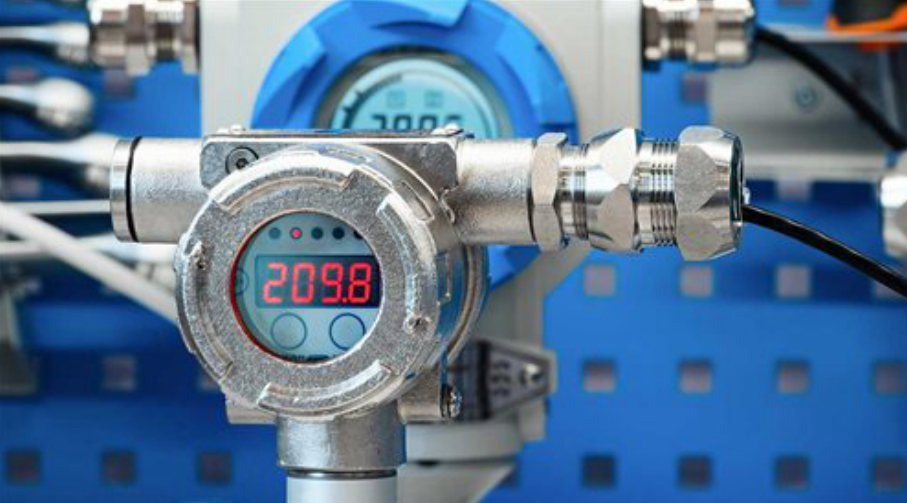
Ethernet is all around us – from points of sale in stores, LED signage in stadiums and even some parts of the industrial automation process. Despite its ubiquity, however, there are areas where it has yet to achieve wide and consistent usage. In this article, I’ll focus on one area in particular, long-distance (>1 km) two-wire networking at 10 Mbps, in remote industrial, building and process automation applications, like the field sensor in the below pciture:
There are several reasons why Ethernet hasn’t “reached” these applications yet – most notably that until recently, there wasn’t an Ethernet specification supporting this cable length. Without a defined specification, designers had to use existing Ethernet standards for some parts of network development and other methods for the remainder. But that approach creates several challenges, such as the addition of gateways to support the mix of protocols, which greatly increases system complexity.
There’s also the challenge of cable usage, as standard Ethernet implementations, typically use two to four twisted-pair cables and are not designed for single-pair communications.
Because many factory and building automation designers are likely already using existing single-pair fieldbus technologies, such as 4-to 20-mA current loops, Highway Addressable Remote Transducer, (HART) and Control and Communication (CC)-Link for long-distance applications, adding Ethernet to their network through protocol conversion could increase cable cost and weight.
Fortunately, single-pair Ethernet PHYs, especially those for the 10BASE-T1L standard, are designed to help engineers looking to increase the bandwidth of their industrial communications and unify their network under a single interface protocol without increasing cable costs or network complexity.
In addition to using fewer cables, single-pair Ethernet helps eliminate the need for protocol conversions and other interventions to enable fast, seamless data transfer between operator and edge node. This freedom of data transfer overcomes the challenges mentioned above and supports the large amounts of data needed for enhanced predictive maintenance and system health, safety and throughput.
Expanded connectivity enables the use of Ethernet networking from an app on any internet-connected device to the most remote edge node, such as a field transmitter or building controller, without sacrificing distance or data rate. In some cases, it’s possible to reuse existing wire harnesses when upgrading from some legacy fieldbus protocols.
With the development of IEEE 802.3cg, it’s now feasible to transmit data faster and farther over one pair of twisted wires. This innovation enables designers to take Ethernet to the most remote edge node of a network and supports the same network protocol wherever they are located in the world.
Small, single-pair Ethernet devices need power as well as data.
Two ways to get power to the device:
Second pair enables 2-pair Ethernet (10BASE-T or 100BASE-TX) but uses twice as much wire: Adds weight, cost, and size.
Previous PoE requires (at least) two pairs to work. So, like previous POE technology, IEEE developed one new technology - PODL (Power Over Data line), sending the data and power via single-pair wire.
Power over Datalines (PoDL) for single-pair Ethernet (SPE) is standardized in the IEEE 802.3cg and IEEE 802.3bu. In 802.3bu, PoDL is specified for 100 and 1000 BASE-T1 Ethernet, 802.3cg adds support for 10 BASE-T1L.
Like previous PoE devices, PODL has two types of device.
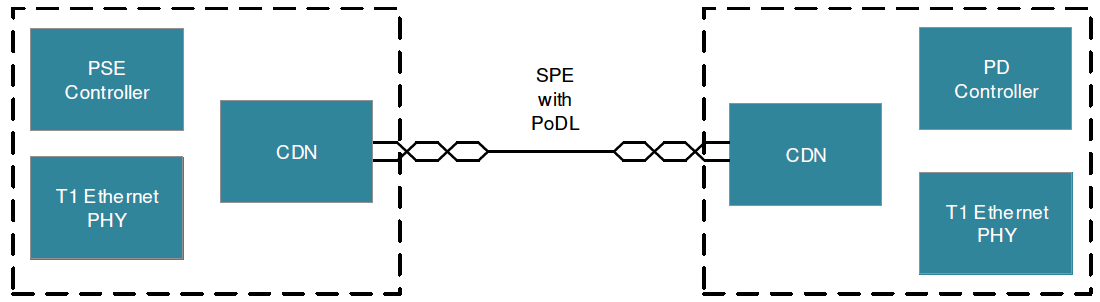
The upper diagram shows a typical PoDL system consisting of power sourcing equipment (PSE) and a powered device(PD). The PSE is typically part of a switch, remote IO, PLC, or media converter. But it could also be a mid-span device without an Ethernet PHY. These all commonly consist of a PSE controller handling the power path and a coupling network combining power and data to one single twisted-pair line.
On the other side of this line, a PD like a sensor or an actuator is connected. Here a coupling network separates power and data. The power path is fed to a PD controller, responsible for handshaking and providing power to the next level of power tree. The data path is connected to an Ethernet PHY.
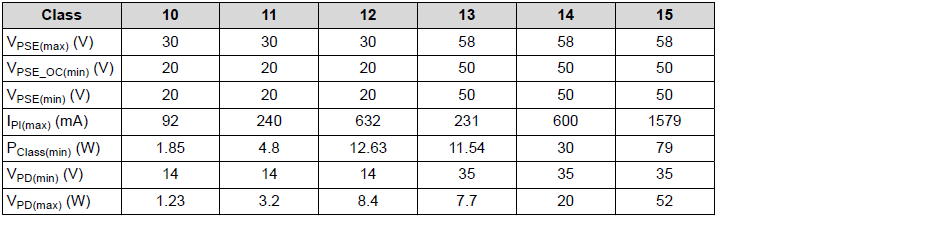
The IEEE standards 802.3bu and 802.3cg describe how this works. The standards also specify power classes and types of devices to encode the data compatibility.

In some application scenarios, you may use HICOTEL 10BASE-T1L media convter for working with your 10BASE-T1L CPE for debugging/capture packets.

In some application scenarios, you may use HICOTEL 10BASE-T1L media convter with PODL PSE function for working with your 10BASE-T1L CPE for puting the power and debugging/capturing packets.

In some application scenarios, you may use a pair of HICOTEL 10BASE-T1L media convters with PODL PSE and PD function for implementing 10BASE-T1L network upgrading or debugging/Capturing packets.

For detailed information of HICOTEL 10BASE-TL1 Converters, please check the below link:
10BASE-T1L Media Converter2025 hicotel - All Rights Reserved.